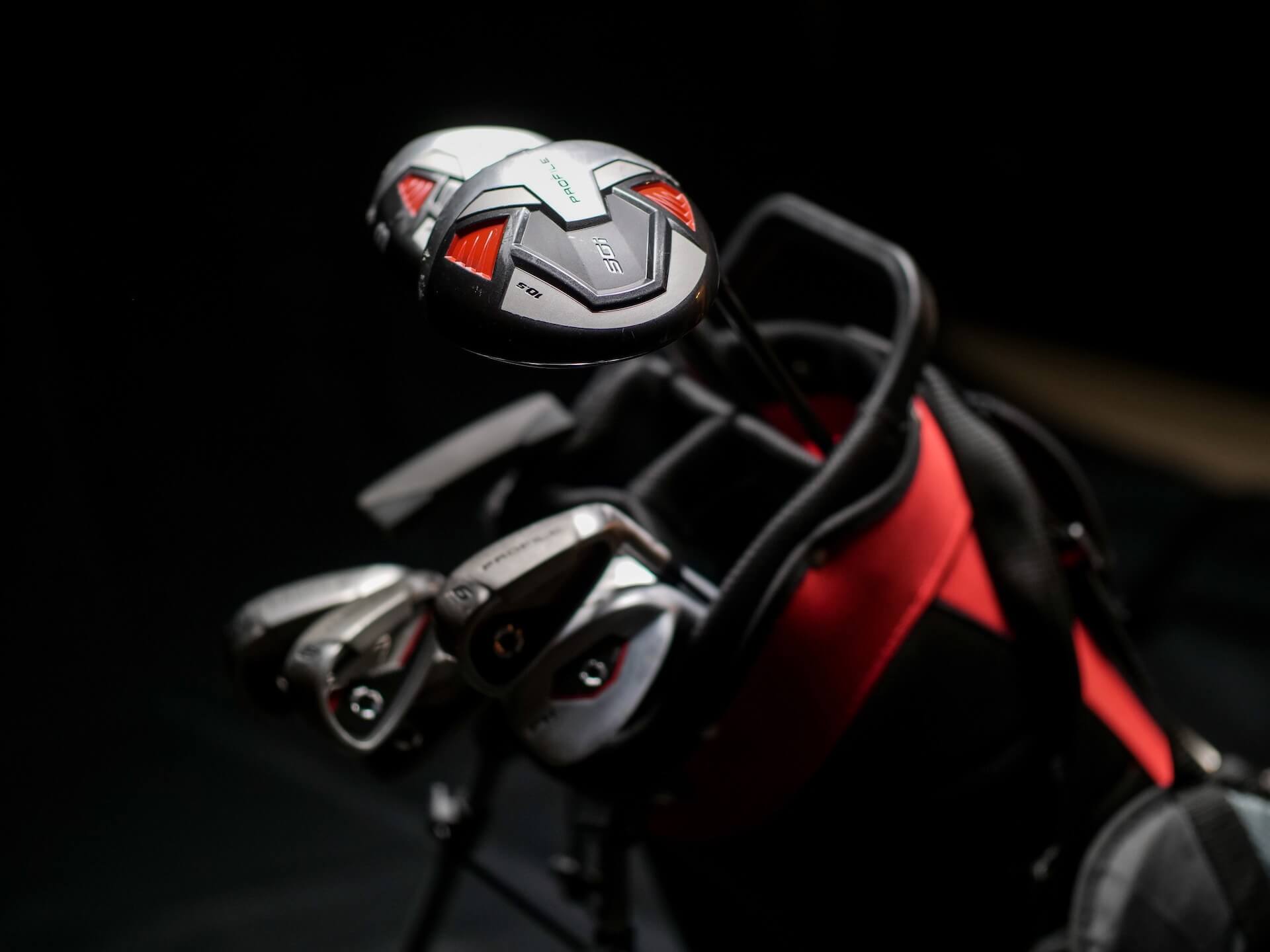
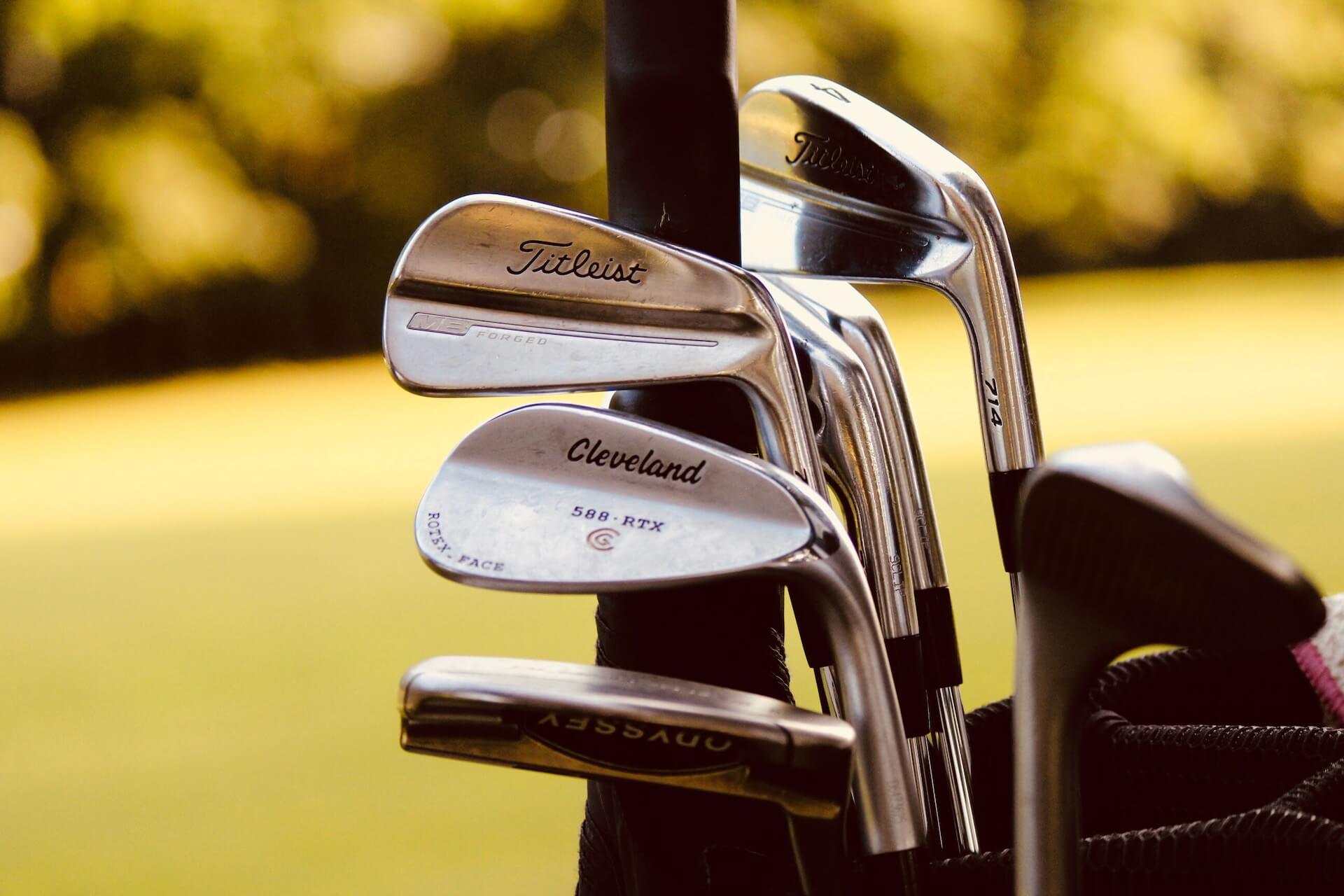
This golf wedge degree chart gives typical lofts of about 41 to 48 degrees for a pitching wedge, 48 to 52 for a gap wedge, 54 to 56 for a sand wedge and 58 to 62 for a lob wedge. Lofts vary by brand, and the pitching wedge in the three current iron sets we checked was 41 to 44 degrees. Detail on each club is in the guides linked below. We summarize makers' published specifications and have not tested these wedges. This chart is part of our golf club guides, which also cover shafts, fitting and regripping.
Golf wedge degree chart
| Wedge | Typical loft | Main job | Guide |
|---|---|---|---|
| Pitching wedge (PW) | About 41 to 48 degrees, depending on the iron set | Full approach shots, longer chips and pitches | What degree is a pitching wedge |
| Gap or approach wedge (GW, AW, W) | About 48 to 52 degrees | Fills the loft and distance gap between PW and SW | What degree is a gap wedge |
| Sand wedge (SW) | 54 to 56 degrees | Bunkers, short approaches, chips and pitches | What degree is a sand wedge |
| Lob wedge (LW) | 58 to 62 degrees | High, soft shots over a hazard to a short pin | What degree is a lob wedge |
These are ranges, not rules. The top of the PW range, 46 to 48 degrees, is where the specialist wedge lines start. No governing body fixes the loft of a "pitching wedge" or a "gap wedge"; each manufacturer decides, and the names are a convention.
- Titleist Vokey SM10
- PING s259
- Callaway Paradym Ai Smoke MAX Fast
- Ping G430 (PW plus wedge options)
- Titleist T150 (PW only)
What the angles look like
The difference between a 46 and a 60 degree wedge is 14 degrees of face angle. The drawing is to scale for the loft numbers shown.
What the manufacturers actually make
The ranges above are typical ranges, our synthesis, and are consistent with the lofts that these brands list for their own clubs. The chart plots those lofts against the bands. They are recent models and not necessarily each maker's latest release.
| Maker and model | Lofts listed | Source |
|---|---|---|
| Titleist Vokey Design SM10 wedges | 46, 48, 50, 52, 54, 56, 58, 60 and 62 degrees, each with a bounce and grind code (for example 56.10S) | Titleist's SM10 launch release |
| PING s259 wedges | 46 to 62 degrees, in several grinds | PING's s259 page |
| Titleist T150 irons | 44 degree pitching wedge | Titleist's T-Series release |
| Callaway Paradym Ai Smoke MAX Fast irons | PW 44, AW 48, GW 52, SW 56 degrees | Callaway's product page |
| Ping G430 irons | PW 41 degrees; wedge options of 45.5, 50, 54 and 58 degrees | Ping's G430 iron page |
Two things stand out. First, the iron-set pitching wedge ranges from 41 (Ping G430) to 44 (Titleist T150, Callaway MAX Fast), which is below the 47 to 50 degrees in the older reference points later on this page. Second, the specialist wedges (Vokey, PING s259) start at 46, so a golfer with a 41 or 43 degree PW needs a gap wedge below the usual 48 to 52 range, around 45 to 48 degrees by our arithmetic from the 4 to 6 degree spacing below.
How pitching wedge lofts have moved
Plugged In Golf noted in 2020 that pitching wedges "can be found as weak as 47 degrees" in traditional sets and as strong as 41 in super game-improvement irons. Golf.com reported that the original PING Eye2 spec sheet had a 50 degree pitching wedge. The figures below are reference points from different sources, not a dated series. For how 7-iron lofts compare by model, see our iron specs and lofts chart.
- Ping Eye2, original spec50°Golf.com, Fully Equipped column
- Traditional blade setsas weak as 47°Plugged In Golf, updated 26 January 2020
- Titleist T15044°Titleist T-Series release
- Callaway Paradym Ai Smoke MAX Fast44°Callaway product page
- Ping G43041°Ping G430 iron page
- Older or traditional
- Current iron sets
Pitching, gap, sand and lob in short
Pitching wedge. The last club in most iron sets and the one with the least loft of the four. Because makers keep strengthening iron lofts, the number stamped "P" has drifted downward. Check your own club rather than assuming. See what degree is a pitching wedge.
Gap wedge. Also sold as an approach wedge (AW), or marked with a G, A, W or just the loft number. It exists because the jump from a modern PW to a 56 degree sand wedge can be 12 to 15 degrees (56 minus a 41 to 44 degree PW). See what degree is a gap wedge.
Sand wedge. Usually 54 or 56 degrees, with enough bounce to glide through sand and turf. Our sand wedge guide explains 54 versus 56 degrees and bounce.
Lob wedge. 58 to 62 degrees. The most loft in the bag, and the least forgiving on poor strikes. See what degree is a lob wedge.
Loft is half the picture: bounce and grind
Vokey lists each SM10 as loft, bounce and grind together. A 56.10S is 56 degrees of loft, 10 degrees of bounce and the S grind. Two wedges of the same loft can behave very differently on firm or soft turf and in sand depending on bounce. Our guide to what bounce does explains how to match it to your swing and course conditions.
The chart shows which bounce options Titleist and PING offer at each loft. The 58 and 60 degree wedges have the widest choice.
| Loft | 4° bounce | 6° bounce | 8° bounce | 10° bounce | 12° bounce | 14° bounce |
|---|---|---|---|---|---|---|
| 46° | F | |||||
| 48° | F | |||||
| 50° | F | F | ||||
| 52° | F | F | ||||
| 54° | M | S | D | F | ||
| 56° | M | S | D | |||
| 58° | T | M | S | D | K | |
| 60° | T | M | S | D | K | |
| 62° | M |
How many wedges to carry
You can carry at most 14 clubs under the Rules of Golf (Rule 4.1b), so each extra wedge costs a place for another club. National Club Golfer lists two tour setups, one with three and one with four wedges including the pitching wedge. They are examples, not a template for your game.
How to choose a wedge set
- Find the loft of your pitching wedge. It is usually stamped on the sole or listed on the maker's spec page for your iron set. If it is not, a club fitter or golf shop can measure it.
- Decide how many wedges you carry. The two tour setups above use three and four, counting the PW.
- Space the lofts evenly. GOLFTEC suggests 4 to 6 degrees between wedges, a working guideline rather than a rule, so that full-swing distances are spaced evenly. Enter your own pitching wedge loft below to see the lofts that spacing gives.
- Check your gaps on a launch monitor or range. Loft predicts the order of your clubs, not the yardage. Hit three solid shots with each wedge and note the carry, then look for gaps that are too wide or too close.
- Match bounce to your turf and swing. Steeper swings and soft conditions generally suit more bounce; shallow swings and firm conditions suit less. Our best wedge loft guide goes into choosing between the common options.
- PW44°
- Wedge 249°
- Wedge 354°
- Wedge 459°
How far does each wedge go
Distance depends on swing speed, strike quality, ball and conditions, so this chart does not list yardages. Two golfers with identical wedges can be 20 yards apart. We looked for a published yards-per-degree rule from a named source and did not find one we could verify, so measure your own carry as described in step 4 above.
Source and date
Lofts checked against the Titleist, PING and Callaway pages linked above on 5 and 7 October 2026. The bounce chart uses Titleist's 22 January 2024 SM10 release (which prints 54.14F twice, so a 56.14F is not shown) and PING's undated s259 table. Manufacturers change lofts between models, so check the spec page for your exact club.