
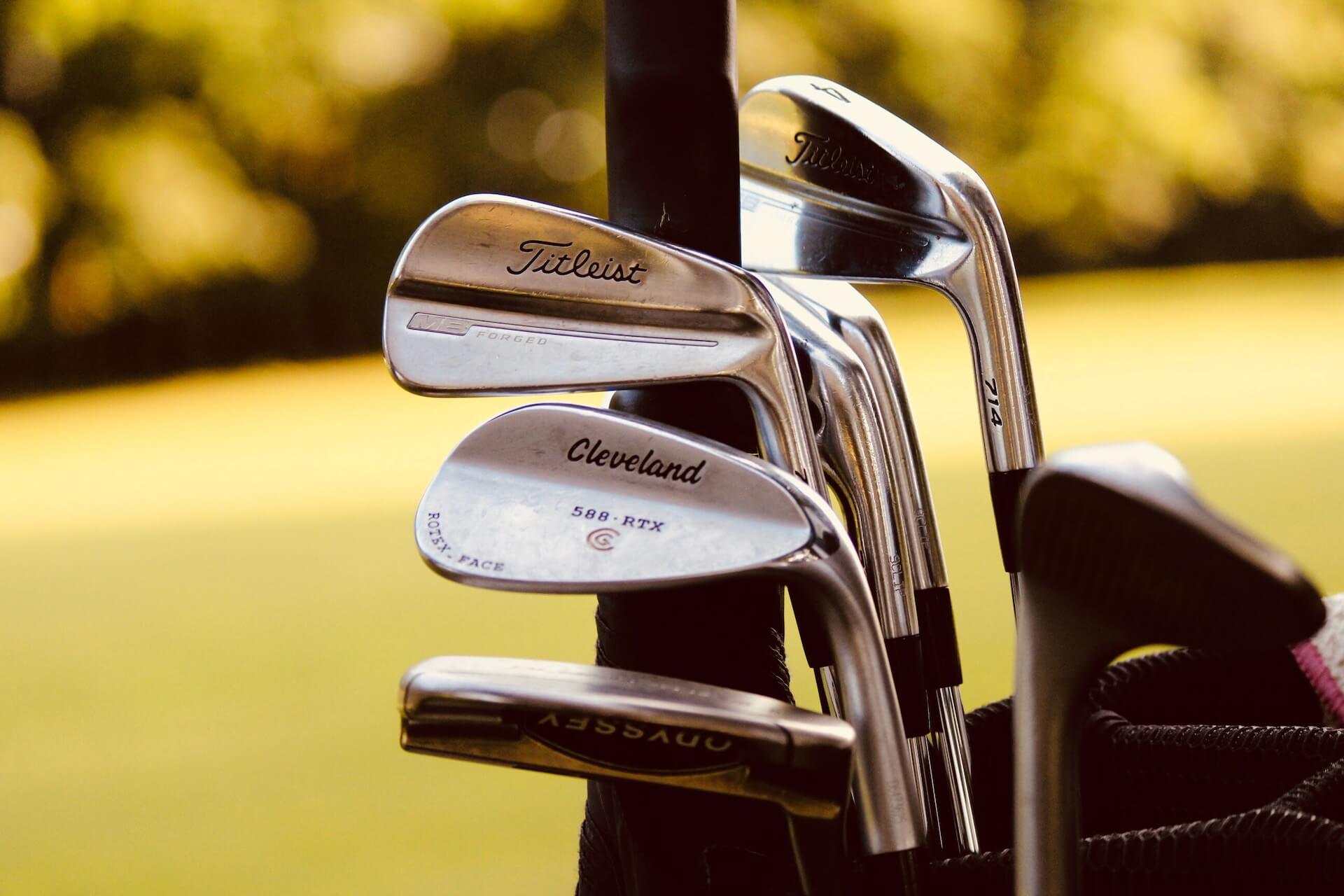
A lob wedge is typically 58 to 62 degrees. Titleist's Vokey Design SM10 comes in 58, 60 and 62 degrees, and Ping's G430 wedge options include a 58. It is the highest-lofted club most golfers carry. See the wedge degree chart for how it compares with the other wedges. Our golf clubs hub collects the other wedge and club guides.
Lob wedge lofts by maker
| Maker and model | Lob wedge lofts | Source |
|---|---|---|
| Titleist Vokey Design SM10 | 58, 60 and 62 degrees | Titleist SM10 release |
| Ping G430 iron-set wedge options | 58 degrees | Ping G430 iron page |
Where the lob wedge sits depends on where the rest of your wedges sit. After a 56 degree sand wedge, a 60 is a 4 degree step and a 62 is a 6 degree step. After a 54, a 58 is a 4 degree step.
Loft, bounce and grind on a lob wedge
Titleist's SM10 release lists these combinations at 58, 60 and 62 degrees, written as loft, then bounce, then grind letter. The release may not list every combination Titleist sells, so check Titleist's current Vokey page before you buy:
| Loft | Combinations listed |
|---|---|
| 58 degrees | 58.04T, 58.08M, 58.10S, 58.12D, 58.14K |
| 60 degrees | 60.04T, 60.08M, 60.10S, 60.12D, 60.14K |
| 62 degrees | 62.08M |
So a 60.08M is 60 degrees of loft with 8 degrees of bounce in the M grind. Titleist's release calls the T grind SM10's low-bounce lob wedge option, and the 4 degree T versions are the lowest-bounce wedges in the lineup. The 14 degree versions are the highest. In practice, the same loft can play very differently: a low-bounce lob wedge suits firm, tight lies, while a high-bounce one is more forgiving in soft sand or turf. Our page on what bounce does explains how to choose.
What a lob wedge does well
The high loft launches the ball steeply and lands it with little roll. It is used for:
- Shots over a bunker or hazard to a pin cut close to the edge of the green.
- Short pitches where there is little green to work with, including short-sided shots that need to stop quickly.
- Flop shots from good lies, where opening the face adds loft at address (it also changes how the bounce meets the ground).
It is generally the least forgiving wedge to strike, so a thin shot can run well past the hole and a heavy one can drop short.
Do you need a lob wedge?
Not necessarily. A 54 to 56 degree sand wedge can handle many greenside shots, and a lob wedge adds a higher, softer option. Reasons to carry one:
- Your course has firm, fast greens with pins close to hazards.
- You already have a reliable full-swing and half-swing game with your other wedges.
- You have room in your 14 clubs for it.
Reasons to skip it:
- You are still learning consistent contact with your sand wedge.
- You need the slot in your 14 clubs for another long club, such as a fifth hybrid. Our beginner club guide suggests which clubs matter most when you are starting.
Choosing between 58, 60 and 62
Pick the loft by the club before it. Fitters often aim for about 4 to 6 degrees between wedges.
- 58 degrees is a natural step after a 54 degree sand wedge.
- 60 degrees is a 4 degree step after a 56 degree sand wedge.
- 62 degrees gives the most loft, though the SM10 release lists it only as the 62.08M, so there is less choice of bounce. Choose it only if you want a very high, short shot and are comfortable with a 6 degree step after a 56.
Then check the actual distances: hit three solid shots with each wedge on a launch monitor or at a range and compare the carry. Distances depend on swing speed and strike, so we do not publish yardages. For the club before the lob wedge, see what degree is a sand wedge, and for choosing your wider wedge lineup see what golf wedge degree is best.
Source and date
Lofts and bounce combinations checked against the Titleist and Ping pages linked above on 5 October 2026.